
Key Highlights
- The article critiques Ken Burns’s six-part documentary series “The American Revolution” for its incoherent narrative and failure to provide a clear understanding of the American Revolution.
- Burns aims to show respect and ecumenical sympathy towards all those involved, but this approach leads to confusion about what the revolution was ultimately about.
- The documentary includes narratives on military history, slave struggle for freedom, and Native American resistance, but does not satisfactorily explain the significance of the Patriot cause.
- Burns’s film is praised for its visual elements, such as reenactments and beautiful landscapes, but criticized for being vague about the revolution’s political achievements.
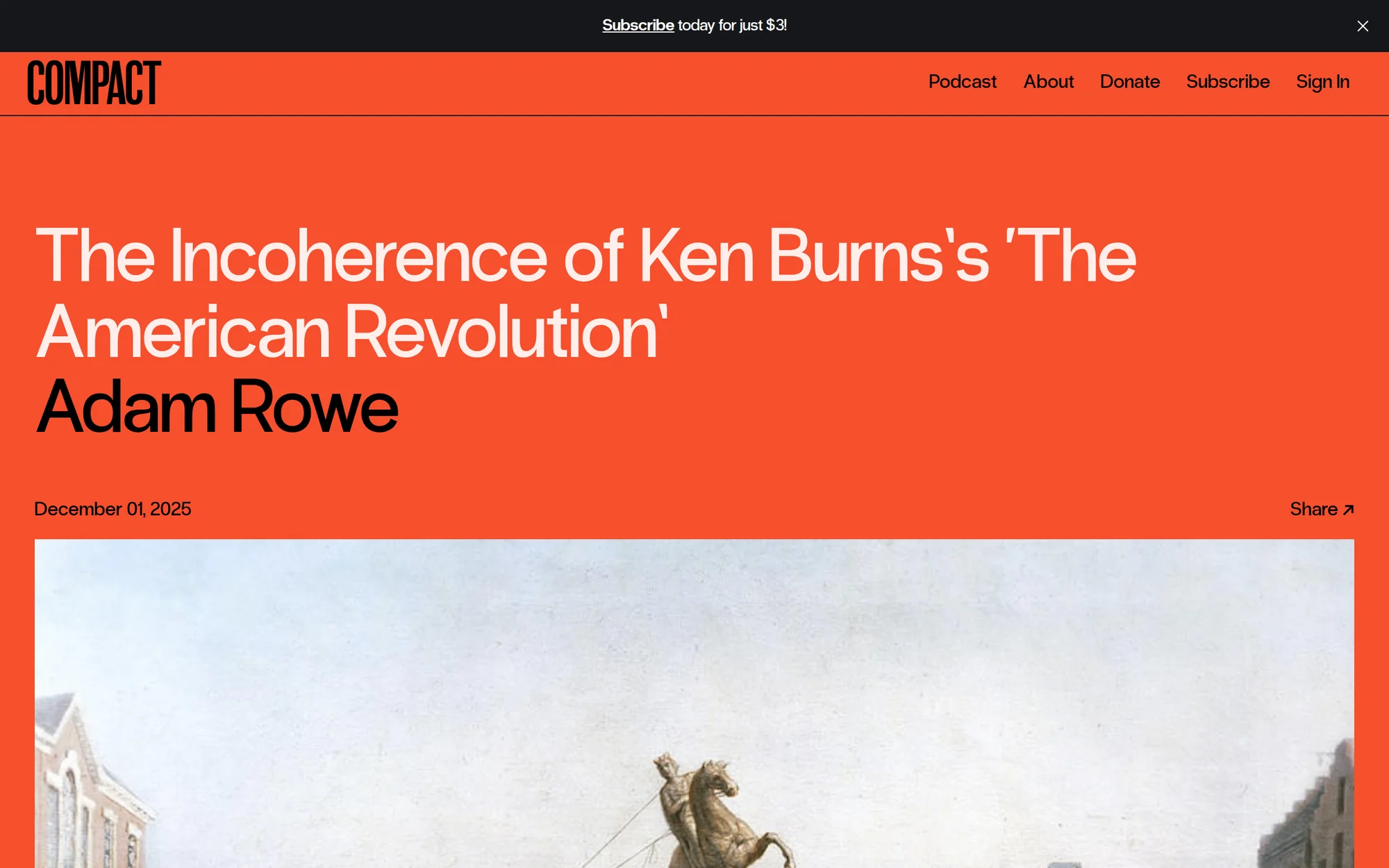
The Incoherence of Ken Burns’s “The American Revolution”
Ken Burns has embarked on an ambitious yet problematic endeavor with his six-part, twelve-hour documentary series “The American Revolution.” Adam Rowe, in his critique, argues that while Burns’s approach to portraying the revolution with respect and ecumenical sympathy is commendable, it ultimately results in a confusing narrative.
The Conflicting Narratives
Rowe notes that the documentary intertwines three narratives: a traditional military history of the War for Independence, the struggle of American slaves for freedom, and Native American resistance against encroachment. These conflicting stories are meant to illustrate the divided nature of American history, but Rowe contends this approach is misguided.
Political Overlooked in the Documentary
The article emphasizes that while Burns’s documentary acknowledges the struggles of marginalized groups during the revolution, it fails to adequately explain what the Patriot cause was ultimately about. Rowe argues that the political achievements of the American Revolution are overshadowed by a focus on oppression and conflict.
Visual Excellence but Content Flaws
Burns’s documentary is praised for its visual elements, such as reenactments, beautiful landscapes, and live-action versions of historical events. However, Rowe points out that these visuals do little to clarify the political significance of the revolution. The film honestly depicts the oppression faced by slaves and Native Americans but lacks a clear explanation of why the Patriot cause was important.
The final episode’s opening line, a quote from historian Jane Kamensky, is criticized for its vagueness: “I think that to believe in America, rooted in the American Revolution, is to believe in possibility.” Rowe argues that this statement does not provide any substantive meaning or direction for viewers trying to understand the revolution’s significance.
Conclusion
Rowe concludes by suggesting that Burns’s approach, while well-intentioned, ultimately fails because it cannot reconcile the conflicting narratives of American history. The article raises important questions about how we should remember and teach our nation’s founding, especially in a time when historical narratives are increasingly politicized.
The article leaves readers with a thought-provoking question: Can a documentary that respects all perspectives still provide a clear understanding of one of the most significant events in American history?