
Key Highlights
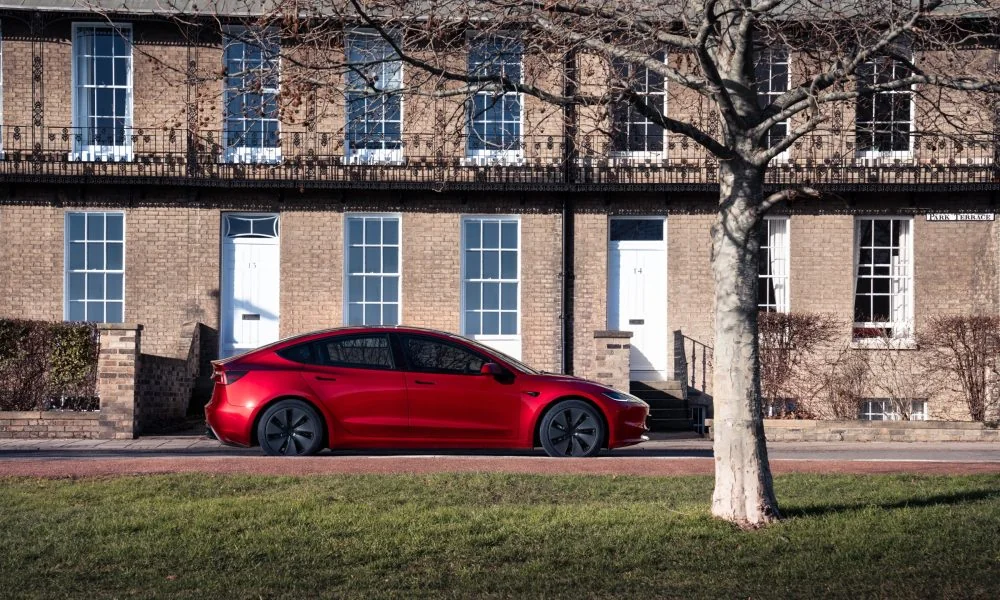
- Tesla considers reintroducing Plaid powertrain to Model 3.
- Challenges include packaging and carbon-sleeved motors.
- New Optimus factory construction officially underway at Giga Texas.
- Tesla aims to produce about 10 million robots annually once completed.
The Plaid Revival: Tesla’s Ambitious Model 3 Reimagining
It’s official—Tesla is considering a return to its Plaid roots with the Model 3. Vice President of Vehicle Engineering, Lars Moravy, revealed in an interview that he thinks about a Plaid Model 3 “all the time.” Moravy also stated that it would likely adopt carbon-sleeved motors from the Model S Plaid, but the challenge lies in packaging.
The idea is intriguing: could a Plaid Model 3 truly push the limits of performance? With a potential reduction in 0-60 MPH acceleration and an increase in top speed, it might just be one of Tesla’s best offerings. However, the journey won’t be easy; Moravy described it as “a tight engineering squeeze.” The real changes will likely focus on ride quality and aerodynamics.
Tesla’s Optimus Factory: A Leap into Robotics
Meanwhile, Tesla is making significant strides in its quest to transform humanoids into a core pillar of the company’s future. Construction has officially begun on the dedicated factory for producing up to 10 million Optimus robots annually. This marks phase two of the North Campus expansion at Giga Texas and forms part of Tesla’s broader strategy.
The factory will be nearly 4,000 feet long, with a second-gen production line targeting high-volume output starting in Summer 2027.
Musk believes Optimus could be more valuable than Tesla’s entire vehicle business. The first units are set to support internal tasks while the team gathers real-world data to refine processes.
SpaceX and NASA’s Lunar Ambitions: A Step Beyond Earth
NASA has unveiled its ambitious plan for America’s first outpost on the Moon, with SpaceX at the center. The base will be built in phases over the coming decade, serving as a stepping stone to Mars. Key components include Blue Origin’s landers and Astrolab’s rover, which will operate autonomously or via remote control.
The moonbase aims for long-term viability by utilizing water ice from the lunar south pole, converting it into drinking water, breathable oxygen, and rocket fuel.
SpaceX holds the NASA Human Landing System contract for Starship, currently targeting 2028. The success of this mission hinges on SpaceX’s ability to demonstrate in-orbit propellant transfer at scale.
Elon Musk has stated that Starship V3 should be capable enough for initial Mars missions, making the Moon Base plan a crucial infrastructure layer connecting Earth and Mars ambitions. This dual focus on autonomous vehicles and lunar infrastructure highlights Tesla’s broader vision of intelligent, general-purpose machines beyond just electric cars.