
Key Highlights
- VFX Supervisor Pablo Helman discusses the challenges and innovations in creating visual effects for “Wicked: For Good.”
- The film features complex visual effects shots involving characters like Glinda and Chistery.
- Helman emphasizes the importance of light direction, reflections, and atmospherics in crafting believable environments.
- Visual effects included extensive work on character development, cityscapes, and musical set pieces.
The Visual Effects Supervisor’s Journey with “Wicked: For Good”
Jon M. Chu’s direction of “Wicked: For Good”, the sequel to the critically acclaimed Wicked, brings a new level of complexity and innovation to the film’s visual effects. Visual Effects Supervisor Pablo Helman, known for his work on films like Star Wars: The Rise of Skywalker, shares insights into the meticulous processes that brought this musical to life.
The Art of Light Direction
Helman begins by emphasizing the importance of light direction in visual effects. He explains, “Light gives everybody a sense of geography. Once you have the sun in there, you can put it wherever you want and there’s always something present that tells you exactly where you are.” This attention to detail is crucial for creating believable environments, especially when shooting in different locations like England, which has a distinct light quality compared to California.
Complex Character Development
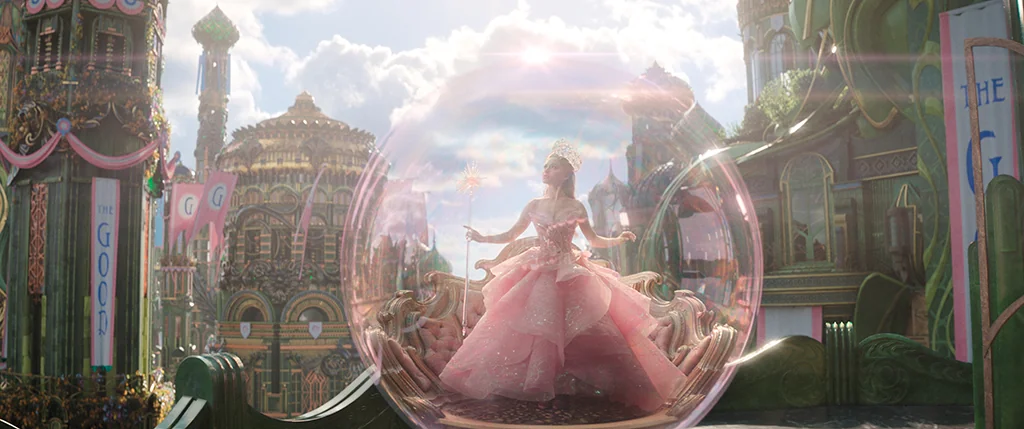
The film sees significant development in its characters, particularly the titular character Glinda. Helman discusses the complexity of visualizing bubbles, stating, “We did previs for three weeks for all of the things that production design had to provide for walls. Because the camera starts in one place and goes through it – so the wall is out – it comes around, and as it comes around and sees itself, it does a complete circle, and the wall comes back in.” This intricate process highlights the technical challenges involved in creating seamless visual effects.
Technical Innovations
Helman also touches on the use of Technocranes to achieve complex shots. He mentions, “Technocranes that have to go to places that had production design parts of walls that we had to take out so the crane could come in, but then you would see it. We had to put the wall back in CG.” This innovative approach ensures that every shot is meticulously crafted and aligns with the film’s vision.
Music and Storytelling
The integration of music into visual effects is another key aspect discussed by Helman. He states, “Music adds a mathematical entity in there for the work that you do. But it also adds emotion when there are certain intervals, like sixes, fifths and crescendos.” This underscores the symbiotic relationship between music and visual storytelling, where both elements come together to enhance the overall narrative experience.
Conclusion
The production of “Wicked: For Good” is a testament to the collaborative effort between creative visionaries and technical experts. Helman’s insights offer valuable insights into the meticulous processes involved in creating visually stunning films, highlighting the importance of light direction, character development, and seamless integration of technology with storytelling.
Pablo Helman concludes by reflecting on the journey, saying, “It’s a sadness that you feel because you work with these people for a long time and now they are moving on. The funny thing in our business is we keep running into each other for 20 years.” This sentiment encapsulates not only the personal satisfaction of completing such a significant project but also the camaraderie shared among professionals in the film industry.
For fans of Wicked, “For Good” promises to be an exciting addition, blending timeless storytelling with cutting-edge visual effects. The expertise and dedication of VFX Supervisor Pablo Helman ensure that this musical continues to captivate audiences around the world.