
Key Highlights
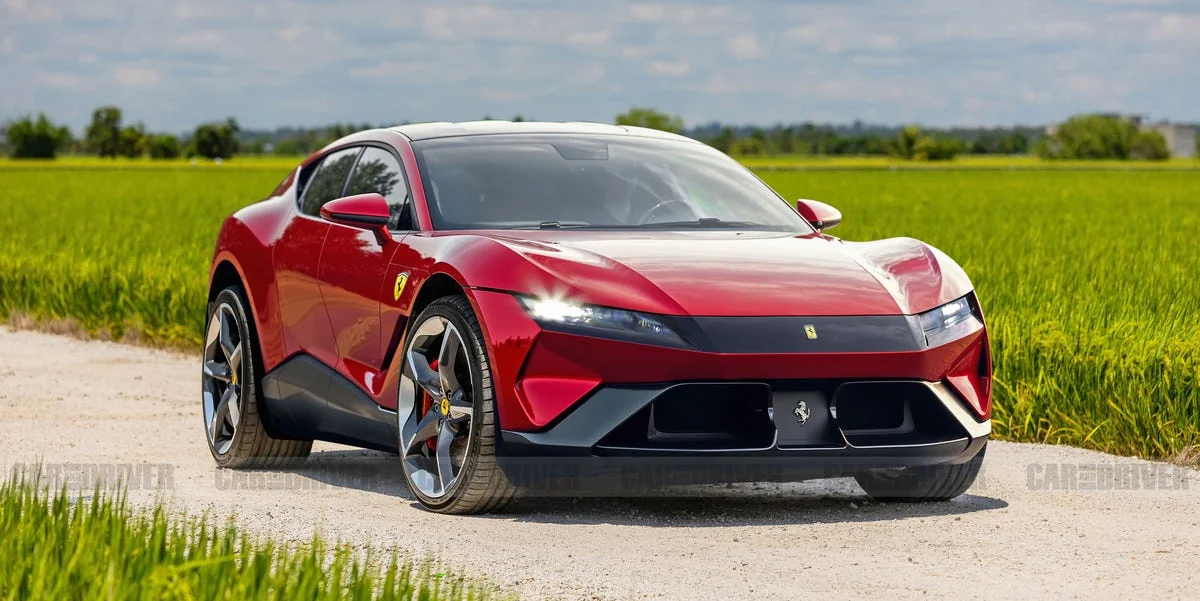
- Ferrari’s new all-electric car will be called Luce, not Elettrica.
- The Luce is a four-door, four-seater with more than 1000 horsepower and a battery pack rated at 122 kWh (gross).
- Love From, the design firm known for Apple products, partnered with Ferrari on this project.
- The interior features tactile controls and a mix of screens and real buttons to improve usability.
Ferrari’s Electric Leap: A Tale of Taste and Touch
When everything is flat, you stop absorbing the information. At least that’s what Jony Ive, co-founder of Love From, told a group of attendees at a recent event in San Francisco. His words ring true as Ferrari unveils its latest electric marvel, the Luce.
A Name Game
Ferrari has been taking its time rolling out this first all-electric model. The car will be called not Elettrica but Luce (Italian for “light”), a nod to luminescence rather than weight. Luce, with its 5100 pounds of beefiness, will outweigh even the Purosangue SUV as Ferrari’s beefiest offering.
Design by Numbers
Ferrari partnered with Love From, known for work on Apple touchscreen products, but the Luce uses tactile switches and glass buttons. This is no surprise given Ive’s background in minimalist design. Yet, touchscreens took a backseat to tactile controls.
Fans of toggles will be delighted by rows of machined metal switches awaiting their questing fingertips.
Where screens are heavy, as in the gauge cluster and center infotainment screen, a clever use of layered OLED display and innovative cut-outs allows for real needles, clocks, and convex lenses to add visual interest and clarity of use. It’s a mix of modern technology and traditional craftsmanship.
The Glassy Interior
Everywhere you look in the Luce is glass or brushed aluminum. The steering wheel is leather-wrapped and slim, appealingly so in a world of chunky tillers. Anodized aluminum switches sit against black glass pods with cruise control, drive mode, and dash lighting on one side, power modes, suspension, and wipers on the other.
Volume and seek controls are on the back, flanked by paddles which control torque delivery for what Ferrari says is a gear-change-like sense of engagement.
The steering-wheel hub moves to match the driver’s preferred seating position, creating a sleek aluminum-framed glass display with OLED graphics seemingly floating at different levels. Corning designed these materials to be more shatter and scratch resistant than even the patented Gorilla Glass on your phone screen.
Starting Ceremony
The end result is both more interesting and easier to parse when driving quickly. The same approach is used on the overhead console, where an airplane-inspired set of toggles and pull-outs controls lights and launch control. In the center console, cut-out tech highlights a clock which can become a chromometer or compass, all with real needles in their glowing centers.
More glass flows from the center console, whose suede-covered lids open butterfly-style, and close with a delicious magnetic click.
Oddly, despite having USB connections, a standard iPhone won’t fit in the console, but Ferrari says there will be a charging pad ahead of the shifter in the final design.
The shifter itself is glass too, a smooth shot-glass sized knob that slides easily through a set of gates machined in the glass surround. It’s theater, and there’s no guarantee it’s as thrilling as firing up a V-12, but at least Ferrari knows it’s important to give some gravitas to its starting procedure.
It’s hard to say what the car might be from just some dash parts and a slim leather seat, but it’s interesting to see Ferrari branching out in both technology and design. The Luce is not always about the horsepower or speed; sometimes, it’s about the experience.
You might think this is new, but it’s been coming for years.
The timeline of electric cars in Ferraris’ lineup has been a slow burn, with the first model set to debut in May. It’s all part of Ferrari’s broader strategy to stay relevant in an increasingly electric world.