
Key Highlights
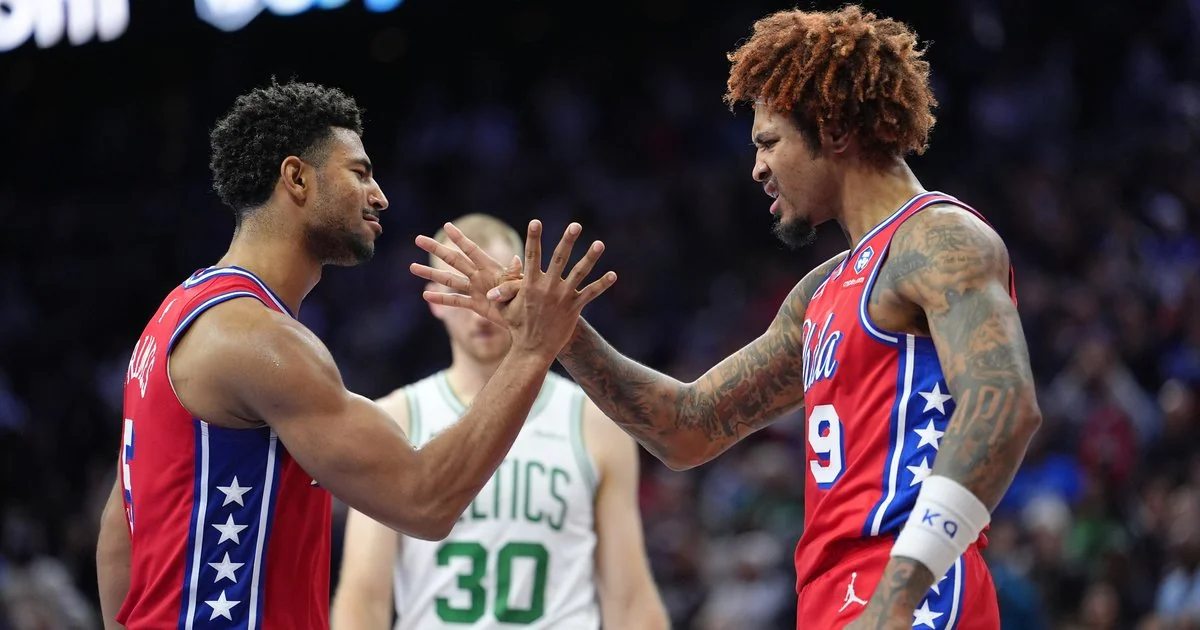
- The Philadelphia 76ers face challenges in retaining key players Kelly Oubre Jr. and Quentin Grimes.
- Oubre and Grimes are Full Bird free agents, giving the Sixers flexibility but also financial constraints.
- The team’s cap situation limits their ability to make significant moves this offseason.
- Grimes’ and Oubre’s roles in the team’s rotation are crucial for the upcoming season.
The Sixers’ Offseason Conundrum: Retaining Key Players
Philadelphia residents can train for Navy Yard jobs, but the Sixers face a more pressing challenge: retaining their top free agents Kelly Oubre Jr. and Quentin Grimes this offseason.
Oubre and Grimes are Full Bird free agents, which means the Sixers have the ability to meet the top of the market on one or both players if they choose to do so. However, this flexibility comes with a price—financial constraints that limit their maneuverability this summer.
Cap Constraints
The Sixers are signed to arguably the two most onerous contracts in the NBA: Joel Embiid and Paul George. These commitments make significant roster changes nearly impossible without trading Tyrese Maxey, which would be a fool’s errand given his importance to the team.
Grimes’ Importance
In terms of Grimes, the Sixers do not have obvious replacements for him. He is one of the three surefire rotation-caliber guards on their roster and letting him walk after trading away Jared McCain would be an optics disaster and a mismanagement of resources.
Retaining Oubre
Oubre’s role as one of the only two rotation-caliber wings on the team is crucial, especially given George’s availability questions. While Oubre picked up his $8.3 million player option last summer because he sensed he could not beat that money in a barren market with little to no cap space, he is set to enter a much more favorable market for players in 2026.
Financial Considerations
If Oubre returns on a salary similar to $8 million and Grimes departs, the Sixers will have around $10 million in tax room as well as $19 million or so in space below the first apron. This could give them a chance to use the entirety or vast majority of the non-taxpayer’s mid-level exception, which has not been used since signing PJ Tucker.
However, using the non-tax mid-level forces a hard cap at the first apron, meaning they would not be allowed to exceed that threshold all season. An offer comprising four years at just over $65 million is currently projected for this deal, but it is risky and may not guarantee success.
Alternative Options
If the Sixers were uninterested in incurring such a hard cap, they could use the taxpayer’s mid-level exception instead. Projected to be worth up to two years and $12.5 million this summer, it is a safer bet but still leaves them with limited flexibility beneath their hard cap at the first apron.
Ultimately, the Sixers face tough decisions in retaining key players while navigating their financial constraints. The upcoming offseason will be crucial for shaping the team’s future and ensuring they remain competitive in the NBA.