
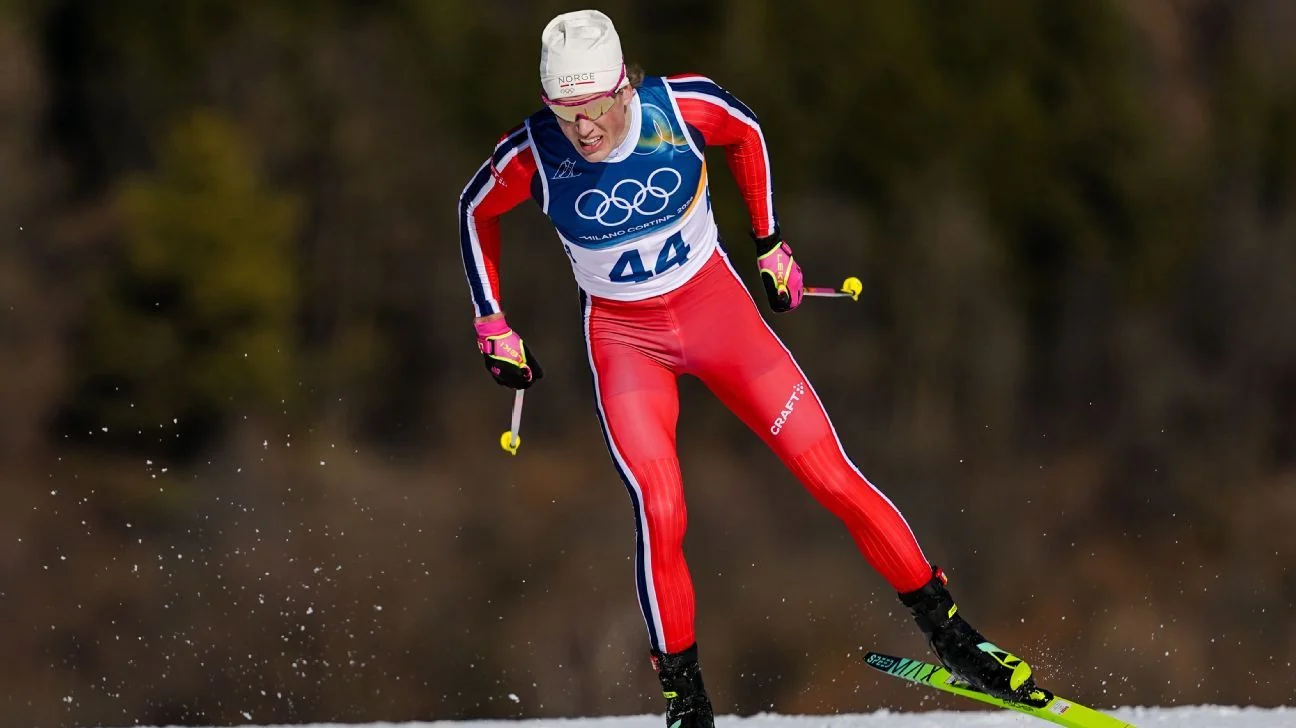
Key Highlights
- Johannes Hoesflot Klaebo ties Winter Games record with his eighth gold medal.
- Klaebo wins the men’s 10-kilometer interval-start race at Milan Cortina Olympics on Friday, February 13, 2026.
- He shares the record with Marit Bjoergen and Bjoern Daehlie in cross-country skiing and Ole Einar Bjoerndalen in biathlon.
- Klaebo’s grandfather, Kare Hoesflot, traveled to Tesero, Italy, to watch his grandson’s victory.
Friday the 13th: A Lucky Day for Klaebo
Few can say they’ve had a Friday the 13th that felt as lucky as Johannes Hoesflot Klaebo. The 29-year-old Norwegian cross-country skiing star, known for his relentless pursuit of excellence and often described by fans and fellow athletes alike as “the king of Nordic skiing,” solidified his status in the annals of Winter Olympic history on February 13, 2026.
The Race to Glory
In the men’s 10-kilometer interval-start race, Klaebo demonstrated why he’s considered one of the most formidable athletes in his sport. He started with a controlled pace, knowing that saving energy for the final hill would be key. The racetrack was set against the majestic backdrop of snow-capped Dolomite mountains, and the weather played a crucial role. Temperatures hovered around 40 degrees Fahrenheit, which favored Klaebo’s early start among the seeded skiers.
Underdog Triumph
The race wasn’t without its drama, as France’s Mathis Desloges took home his second silver medal in his first Olympics. Desloges was a surprise package, having trained incredibly hard for these races and delivering on his promise of excellence. “I told people I was at this level, and now we are delivering,” he said. His performance was a testament to the unpredictable nature of competitive sports and the power of underdog stories.
Record-Breaking Moment
Klaebo’s victory in this race marked his third gold medal at the 2026 Games, tying him with three other Norwegian athletes who have since retired: Marit Bjoergen and Bjoern Daehlie in cross-country skiing and Ole Einar Bjoerndalen in biathlon. The Norwegian Prime Minister Jonas Gahr Stoere took to social media to congratulate Klaebo, saying, “Another show of strength from Johannes Hoesflot Klaebo. What a performance in a thriller of a race!
Congratulations on gold number three in these Olympics!”
For Klaebo, the win was bittersweet. He said, “It’s a special day. This one means a lot for sure. …
I’m lost for words.” His grandfather, Kare Hoesflot, who helped launch his career, traveled to Tesero, Italy, to watch his grandson’s victory. The sense of family pride and the historical significance of Klaebo’s achievement were palpable.
As Klaebo crossed the finish line with a time of 20 minutes, 36.2 seconds, he collapsed on the snow in exhaustion, having shown rare signs of fatigue despite his victory. He was 4.9 seconds ahead of Desloges and 14 seconds ahead of his main challenger, Einar Hedegart, who lost momentum on the last hill.
After the race, Klaebo reflected on his tactics: “It was really hard out there today, so I’m very proud.” He emphasized the importance of pacing himself, knowing that the final push would be critical.
The celebration among Norwegian fans was electric, with national flags draped over athletes and spectators alike.
Friday the 13th may not always feel lucky, but for Johannes Hoesflot Klaebo, it was a day to remember. His record-breaking performance at the Milan Cortina Olympics solidified his legacy as one of the greatest cross-country skiers in history.