
Key Highlights
- Ferrari’s new Power Unit (PU) for 2026 features aggressive innovations to comply with FIA regulations.
- The engine’s design focuses on extreme integration between the Power Unit and chassis, leveraging material advancements.
- The elimination of MGU-H and increased battery weight challenge engineers to optimize energy recovery and performance.
- Ferrari aims for a 50/50 power balance between thermal and electric components.
The New Ferrari F1 Engine: A Deep Dive into the 678 Project
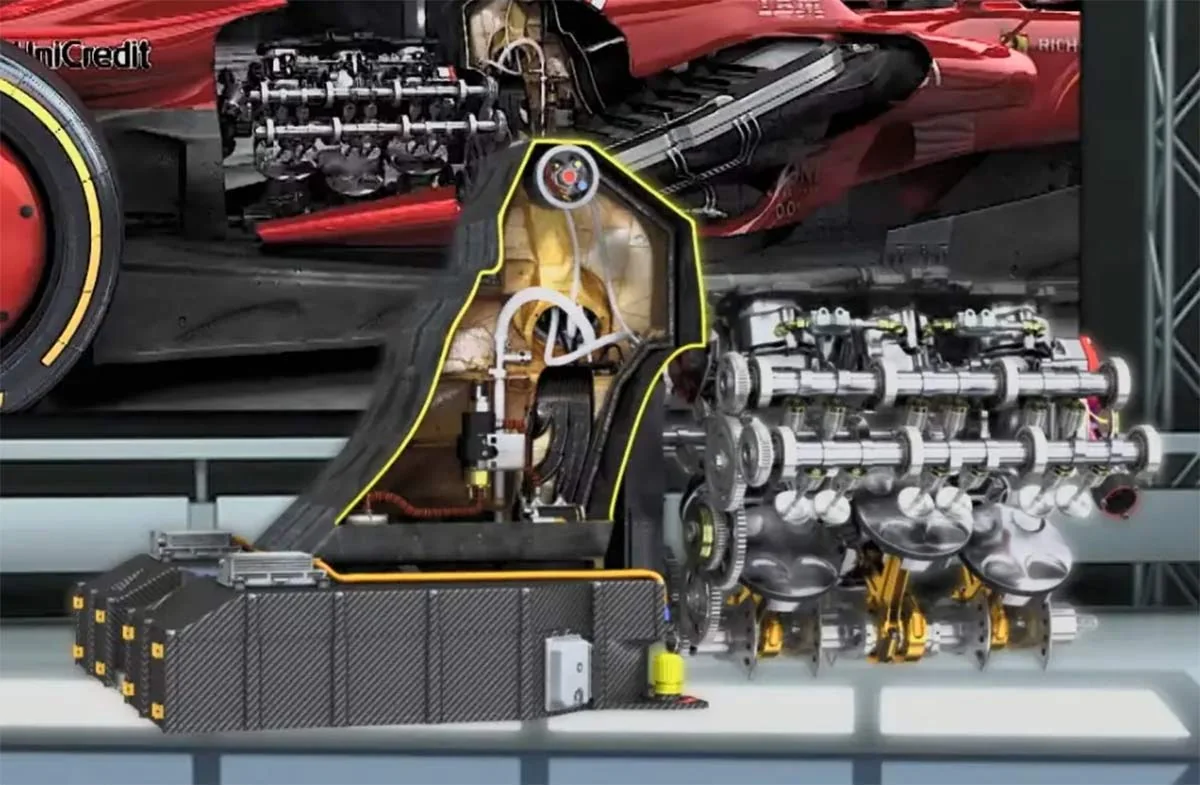
October 17, 2025 marks a significant milestone in Formula 1 as teams gear up for the new regulations. Ferrari’s 2026 Power Unit (PU) is no exception, carrying the project name “678.” This engine represents a bold departure from traditional designs and sets the stage for an uphill battle against more established rivals.
Main Features in Line with 2026 Regulations
The new Ferrari engine must respect common technical specifications but focuses on extreme integration. The absence of MGU-H, increased battery weight and volume, and reduced fuel capacity pose a unique challenge for the Maranello engineers. According to Chrono GP’s report, this requires innovative solutions in efficiency, cooling, and packaging.
The 50/50 hybrid architecture is central to the philosophy: thermal power from the internal combustion engine (ICE) has been reduced to approximately 400 kW compared to the current ~550 kW. Meanwhile, electric power from the MGU-K has surged to about 350 kW, up from ~120 kW.
Ferrari’s Aggressive Innovations
Engineer Wolf Zimmermann and Ferrari’s engine department, led by Enrico Gualtieri, spearheaded these aggressive innovations. The goal is not only to reduce sidepod bulk but also to enhance overall aerodynamic efficiency through smaller radiators. Material technologies like DMLS are employed for unprecedented alloys in the cylinder head, aiming to operate at higher pressures and temperatures.
The new engine’s compact configuration includes a coaxial turbine and compressor with a thermal barrier between them.
This design aims to improve fluid-dynamic efficiency by isolating the 1000°C turbine from the approximately 200°C compressor. The capacity for energy recovery under braking has doubled, making efficient charge and release cycles critical.
Aerodynamic Integration
The new engine’s dimensions have already guided the aerodynamic design of the 2026 car. Ferrari has pushed towards highly undercut sidepods to free up flow towards the floor. The elimination of MGU-H allows for a lower and narrower engine cover, while increasing heat vent outlets.
The low-sidepod design generates a low-pressure field that feeds into the rear wing, complemented by a rake setup (car tilted forward) enhancing ground effect. Dynamic intake channels air centrally to the engine and laterally to oil radiators, forming an intricate aerodynamic picture deeply linked to the hybrid part’s dimensions.
Conclusion
The 2026 Ferrari Power Unit is not just a power unit but an integrated aerodynamic and structural element. The team faces a long validation phase with bench testing and iterative corrections to optimize performance and reliability. With Wolf Zimmermann’s departure, Enrico Gualtieri will lead the final development, ensuring Maranello remains at the forefront of Formula 1 innovation.