
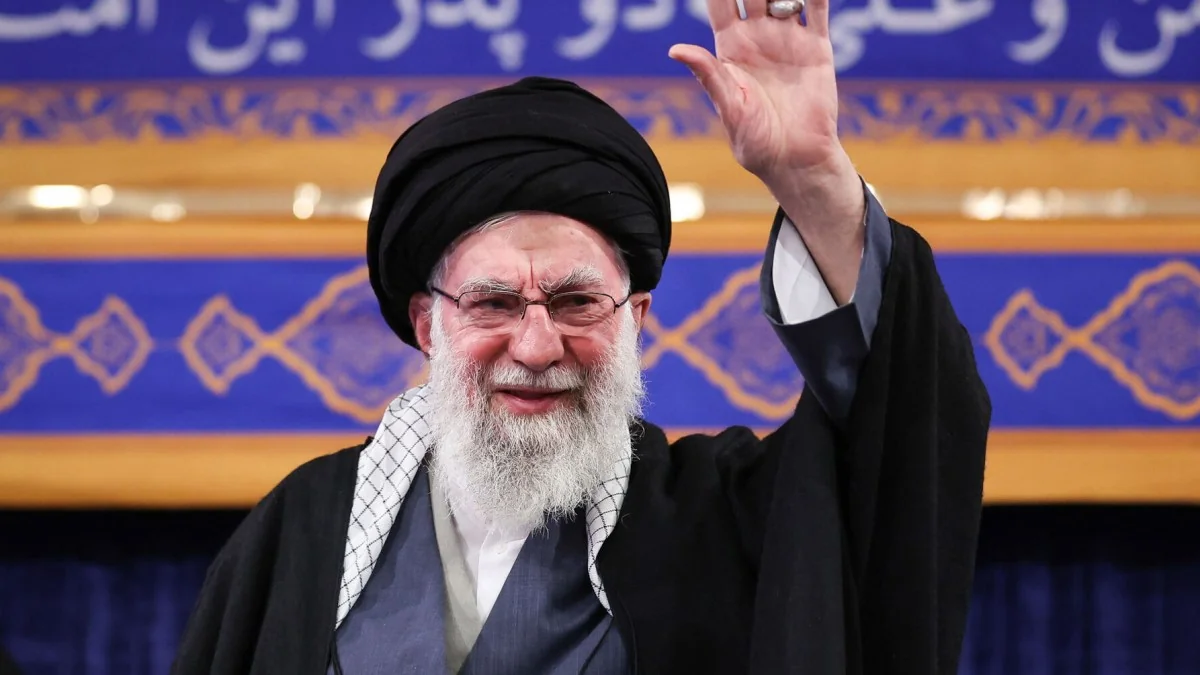
Key Highlights
- Ayatollah Ali Khamenei plans to flee to Moscow if Iran unrest intensifies.
- The plan involves escaping with up to 20 close aides and family members.
- Khamenei’s security forces are struggling to suppress the protests.
- Escalation of the situation could lead to Khamenei’s defection, intelligence sources claim.
The Escaping Leader: Ayatollah Khamenei’s Flee Plan
In a recent development that has sent shockwaves through Iran and its international allies, Ayatollah Ali Khamenei, the supreme leader of the Islamic Republic, has reportedly drawn up an escape plan to Moscow if the unrest in his country intensifies. According to an intelligence report shared with The Times, the 86-year-old leader is preparing a contingency that would see him flee Tehran alongside a close circle, including his son and designated successor, Mojtaba.
The plan is detailed and includes gathering assets, properties abroad, and cash to ensure a smooth exit. Intelligence sources indicate that Khamenei’s network of semi-state charitable foundations known as Setad holds significant financial resources estimated at $95 billion, providing the necessary funds for his escape route. These resources include properties and companies, all carefully controlled by the supreme leader.
Aide’s Perspective
Beni Sabti, a former Israeli intelligence officer who fled the regime eight years post-1979 Islamic revolution, provided further insights into Khamenei’s intentions. “There is no other place for him but Moscow,” Sabti stated in an exclusive interview with The Times. He highlighted that Khamenei has long admired Russian President Vladimir Putin and noted the similarities between Iranian and Russian cultures.
Historical Precedent
The intelligence report draws a parallel to the escape of Syrian leader Bashar al-Assad, who fled Damascus in 2014 with his family to Moscow as opposition forces advanced. Khamenei’s plan is based on this historical precedent and includes an exit route that has been meticulously planned.
Escalating Unrest
Nationwide protests triggered by economic hardships have gripped major cities in Iran, including the holy city of Qom. The demonstrations are fueled by rising inflation, deteriorating living conditions, and a sense of disillusionment with Khamenei’s leadership. Anti-riot forces, composed of the Islamic Revolutionary Guard Corps (IRGC), Basij militia, police, and army, have been deployed to suppress the unrest, but their effectiveness is questionable.
Security Forces’ Role
The security forces are under Khamenei’s total command as the supreme source of power in Iran. However, intelligence assessments suggest that Khamenei might be weaker both mentally and physically since last year’s 12-day war with Israel, during which he was confined to a bunker for his safety.
Psychological Profile
A western intelligence agency’s psychological profile of the leader reveals him as a “paranoid” figure who sees tactical compromise in the long-term greater cause. While ideologically motivated, Khamenei is also pragmatic and focused on survival. The profile highlights his obsession with preserving the regime above all else.
Contextual Background
Ayatollah Ali Khamenei has been at the helm of Iran since 1989, facing numerous challenges including internal unrest, external pressures from Western nations and regional conflicts. His leadership style is characterized by a blend of ideological rigidity and pragmatic decision-making. The recent economic turmoil in Iran has exacerbated tensions, leading to widespread protests that threaten his regime’s stability.
Expert Analysis
Analysts warn that the current situation could lead to significant geopolitical shifts if Khamenei indeed flees to Moscow. “Such a move would destabilize regional politics and potentially alter the dynamics of Iran’s relationship with Russia,” commented Dr. Fatima Jamalpour, an expert on Iranian affairs at The Times.
Implications for Iran
The potential defection of Khamenei could lead to a power vacuum within the regime, complicating internal governance and external relations. Moreover, it would further strain the already tenuous relationship between Tehran and Western nations, particularly the United States, which has long been critical of his leadership.
Conclusion
The intelligence report underscores the volatile nature of Iran’s current political climate. As protests continue to intensify, Khamenei’s escape plan could become a reality, reshaping not only domestic politics but also regional and global geopolitics. The international community is closely monitoring developments in Tehran as the situation remains fluid and unpredictable.