
Key Highlights
- Lav Diaz’s film “Magellan” portrays the explorer with a tableau vivant style, emphasizing environmental and human details.
- Mona Fastvold’s “The Testament of Ann Lee” is a stylized musical bio-pic centered on the British evangelist who founded the Shakers.
- “Magellan” and “The Testament of Ann Lee” explore zealots through formal devices, reflecting on religious fervor and colonialism.
Zealots on Screen: “Magellan” and “The Testament of Ann Lee”
In the realm of cinema, two recent films, “Magellan” directed by Lav Diaz and “The Testament of Ann Lee” by Mona Fastvold, offer deep dives into the lives of religious zealots. These portraits not only highlight their fervent beliefs but also explore the broader implications of their actions on society.
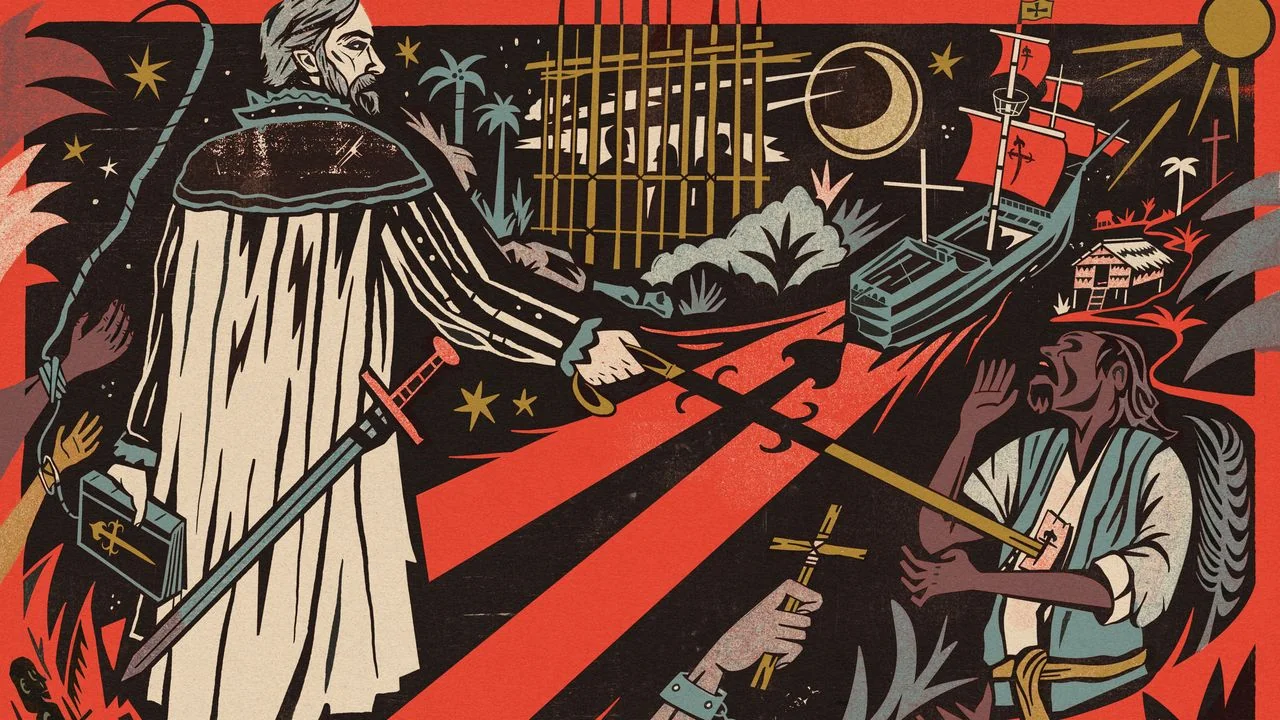
Lav Diaz’s “Magellan”: A Tableau Vivant of Colonialism
“Magellan”, which premiered in 2026, is a striking piece of work that reimagines the life and legacy of Ferdinand Magellan. The film, co-written by Diaz himself, stars Gael García Bernal as the notorious explorer who embarked on the first circumnavigation of the globe. Diaz employs a unique visual style, often described as a tableau vivant—a static yet living scene—where characters are presented at a distance to emphasize both their individuality and their environment.
The film’s opening scene is particularly memorable: Magellan lies motionless on a beach strewn with bodies, his presence barely noticeable until the viewer realizes who he is.
This approach allows Diaz to focus on the broader context of the conquest—namely, the bloodshed and violence that accompanied it. In this manner, Diaz critiques colonialism through visual and narrative means, making viewers confront the brutal realities of Magellan’s expeditions.
Mona Fastvold’s “The Testament of Ann Lee”: A Musical Epic
“The Testament of Ann Lee”, released in 2026, takes a different but equally compelling approach to religious zealotry. The film centers on Amanda Seyfried as Mother Ann, the founder of the Shaker movement. Fastvold’s direction is characterized by stylized period pieces that blur the line between historical accuracy and artistic expression.
The result is a musical extravaganza where the characters break into song and dance at every opportunity.
The film’s soundtrack, composed by Daniel Blumberg, plays a crucial role in driving the narrative forward. The repetitive nature of the music reflects the Shakers’ commitment to their faith, even as it serves as a vehicle for exploring themes of sexuality and spirituality. Fastvold uses these musical interludes to reveal the personal struggles of Mother Ann, who grapples with her desire for intimacy within the strictures of Shaker doctrine.
Comparative Analysis: Zealotry Through Formal Devices
The two films share a common thread in their portrayal of zealots. Both directors employ formal devices—tableau vivant and stylized musicality—to create a distance between the audience and the characters, thereby encouraging deeper reflection on their actions.
In “Magellan”, Diaz’s use of tableau vivant serves as a critique of colonialism by emphasizing the environmental and human costs. The film forces viewers to confront the violence that accompanied Magellan’s voyages, challenging them to consider the ethical implications of such actions.
Similarly, in “The Testament of Ann Lee”, Fastvold uses stylized musicality to explore the personal and communal aspects of religious zealotry.
The film delves into Mother Ann’s internal conflicts, revealing how her quest for intimacy within a celibate community led to both spiritual transformation and personal tragedy.
Both films are noteworthy not only for their artistic merits but also for their ability to engage with complex historical figures in meaningful ways. As we continue to grapple with the legacies of colonialism and religious zealotry, these bio-pics offer valuable insights into how filmmakers can use cinematic techniques to explore such themes.
While “Magellan” is a more traditional biopic grounded in realism, “The Testament of Ann Lee” takes a more stylized approach. Both directors use their unique visual and narrative styles to create powerful portraits that challenge viewers to reconsider the human cost of religious and colonial zealotry.
In conclusion, these films serve as compelling explorations into the lives of zealous figures from history. They not only entertain but also provoke thought on the enduring impact of such individuals and their legacies.