
Key Highlights
- The NCAA is appealing a preliminary injunction that granted Ole Miss quarterback Trinidad Chambliss eligibility for the 2026 season.
- The injunction prevents the NCAA from prohibiting Chambliss from playing until his eligibility case is fully litigated.
- The NCAA’s filing to the Mississippi State Supreme Court requests overruling of the injunction and interlocutory review.
- Chambliss argues he should have received a medical redshirt in 2022 due to health issues that included getting his tonsils removed in 2024.
The NCAA’s Uphill Battle
The NCAA is facing an uphill battle, as it appeals the preliminary injunction granted by a Mississippi state judge. This move could have significant implications for college football and the organization’s ability to maintain its rules and standards.
Chambliss’ Case
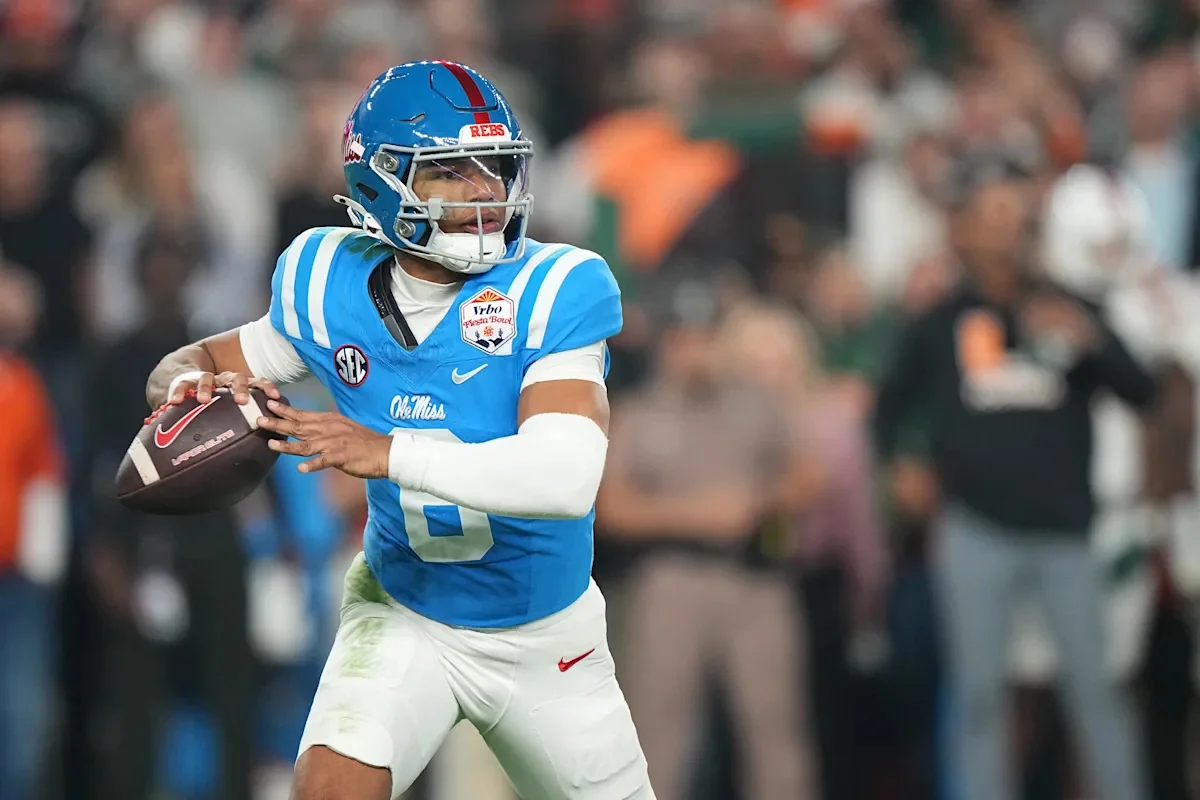
Trinidad Chambliss, 23 years old and quarterback for Ole Miss, argues he should have received a medical redshirt in 2022 due to health issues. Despite not appearing in any games that year at Ferris State, his health problems ultimately led to him getting his tonsils removed in 2024.
The Legal Tangle
According to ESPN’s Pete Thamel, the NCAA has filed a motion with the Mississippi State Supreme Court, requesting interlocutory review of the trial court’s order. The filing argues that if courts can provide special treatment to favored athletes through injunctions, it will undermine the NCAA’s ability to ensure fair competition.
The NCAA’s statement reads: “If courts can intervene in NCAA eligibility decisions to provide special treatment to favored athletes, then the NCAA’s ability to ensure fair athletic competition in which all participants play by the same rules will depend upon the whims of trial courts throughout the country.”
Expert Opinions
Tom Mars, one of Chambliss’ attorneys, told ESPN that he expects the NCAA to face significant challenges. “I expect the NCAA to be spitting chiclets in this appeal as well,” Mars said.
The Broader Implications
This case is not just about Chambliss; it’s a test of the NCAA’s authority and the fairness of its rules. If the NCAA loses, it could set a precedent that challenges its long-standing ability to enforce strict eligibility requirements.
One might think this is new, but the stakes are high. The NCAA has always been seen as an enforcer of rules, and any weakening of its authority could have far-reaching consequences for college sports.
The writing on the wall is clear: If the NCAA loses this appeal, it will signal a shift in how courts view their role in college athletics. And that’s something the organization cannot afford to ignore.