
Key Highlights
- The longest U.S. government shutdown ended quietly after a handful of Democrats voted with Republicans to reopen the government.
- The Democratic Party’s primary demand during the shutdown was for Republican support in extending Obamacare subsidies, which are set to expire at year-end.
- Republicans promised a vote on extending the credits by early December but failed to deliver a viable alternative, leaving 20 million Americans potentially facing increased premiums.
The Longest Government Shutdown Ends Quietly
A long-standing impasse in Washington has finally been resolved as the U.S. government reopened after a 43-day shutdown. The bipartisan move was facilitated by a handful of Senate Democrats who voted with Republicans, breaking ranks with their party to secure the reopening. This compromise came against the backdrop of ongoing negotiations over healthcare subsidies under the Affordable Care Act (ACA), also known as Obamacare.
Obamacare Subsidies and Congressional Deadlock
The crux of the negotiations centered around extending enhanced premium tax credits that were expanded in 2021 to help lower premiums for Americans purchasing health coverage through the ACA. These subsidies, which are set to expire at year-end, would see their support revert back to pre-pandemic levels if not extended. Democrats argued that extending these credits was crucial for millions of Americans who rely on them, emphasizing that this would prevent a significant increase in healthcare costs.
Republican leaders promised a vote on a three-year extension by the second week of December, which could be the last chance Congress has to avoid the subsidies’ expiration.
However, negotiations quickly fell apart when Republicans demanded tougher abortion restrictions as part of any agreement, a move that Democrats firmly rejected. As a result, the Democratic Party proposed a clean, three-year extension without additional conditions.
No Clear Path for Extension
The GOP’s response to this proposal was lukewarm at best. Senate Majority Whip John Barrasso dismissed it as “not a serious offer,” while Democrats accused Republicans of not being open to genuine negotiations. With no alternative Republican plan on the table, and Speaker Mike Johnson insisting there would be a response from his party, the situation remains uncertain.
Key figures in both parties expressed frustration over the lack of progress.
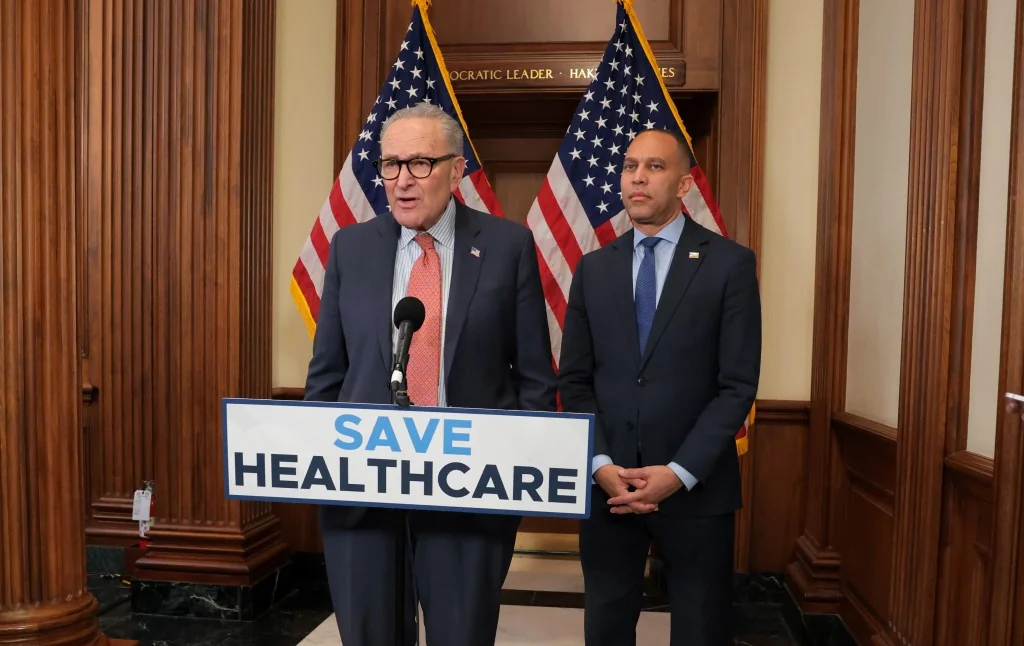
Senate Minority Leader Chuck Schumer noted that the fault lies with Republicans for not supporting the Democratic proposal, while Rep. Vern Buchanan highlighted the pressing need to address healthcare affordability despite the absence of a clear solution from his party.
Healthcare Affordability and Tax Credits
The issue of extending Obamacare subsidies is critical for millions of Americans who benefit from these tax credits. According to data, about 62 percent of beneficiaries had incomes at or below 250 percent of the federal poverty line before the expanded support took effect in 2021. The expiration of enhanced subsidies would result in significant premium increases, with a typical family of four making around $130,000 facing an increase of over $1,000 per month.
The debate highlights the complex interplay between healthcare policy and political negotiations, underscoring the challenges faced by lawmakers as they seek to balance party interests with the needs of their constituents. As the Christmas recess approaches, hope remains that a solution can be found before the end of the year.
For more updates and detailed analysis, stay tuned for The Morning Dispatch.