
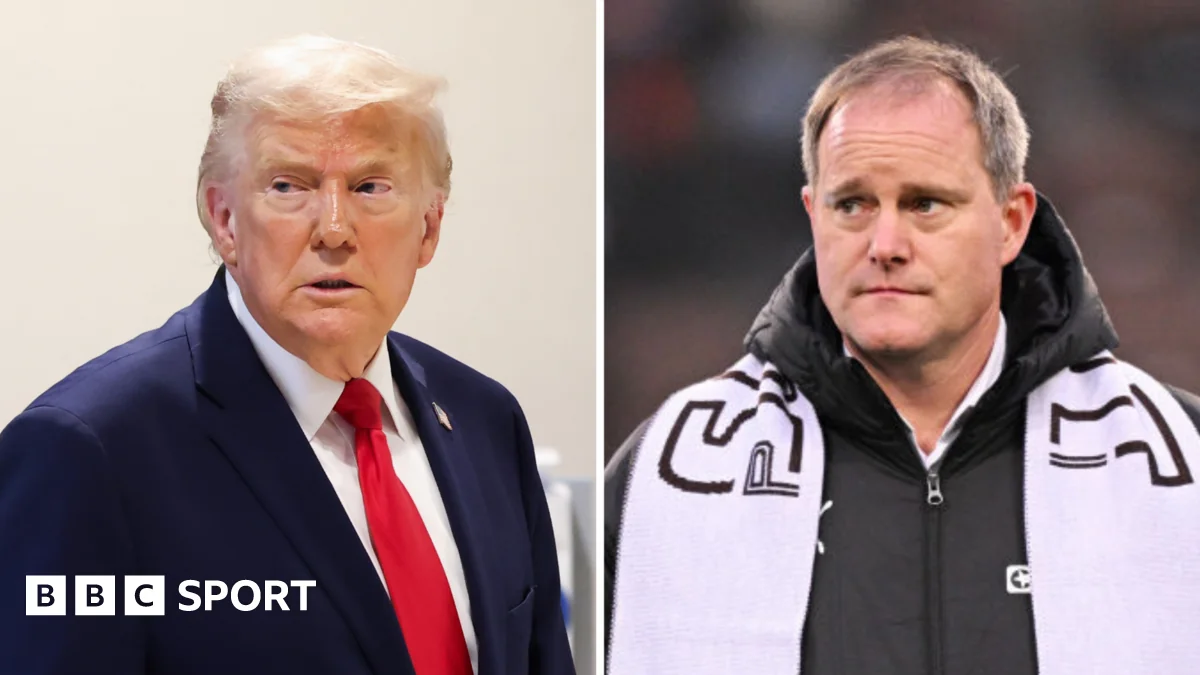
concretely. For me, that time has definitely come.”
The potential boycott stems from heightened tensions between European leaders and the U.S. government over Trump’s aggressive foreign policy moves. Earlier in January, President Trump threatened to impose tariffs on eight European countries, including Germany, which opposed his plan to acquire Greenland.
While Gottlich referenced a past instance of a US-led boycott of the 1980 Olympic Games following the Soviet Union’s invasion of Afghanistan, he argued that the current situation may warrant stronger action. “What were the justifications for the boycotts of the Olympic Games in the 1980s?” Gottlich asked rhetorically. “By my reckoning the potential threat is greater now than it was then. We need to have this discussion.”
The 2026 World Cup will feature 78 matches hosted in the United States, with France and Denmark’s Football Associations expressing no current interest in a boycott.
Historical Context of Boycotts
Gottlich drew parallels between the past Olympic Games boycott and the present situation by saying, “What were the justifications for the boycotts of the Olympic Games in the 1980s?” He emphasized that the potential threat posed by Trump’s actions now may be greater than it was during previous geopolitical tensions.
Further, Gottlich highlighted concerns about setting boundaries and defending values. “As organisations and society, we’re forgetting how to set taboos and boundaries, and how to defend values,” he stated. He questioned when a taboo is crossed, whether it’s by threatening actions or attacks that result in deaths.
“I would like to know from Donald Trump when he has reached his taboo, and I would like to know from Bernd Neuendorf and Gianni Infantino,” Gottlich added. This statement underscores the ongoing tension between European football authorities and U.S.-based organizations.
Past FIFA Conflicts and Current Implications
The DFB’s concerns echo a similar issue at the 2022 World Cup in Qatar, where world football’s governing body threatened players with booking for wearing the OneLove armband during games to promote diversity and inclusion. Seven European nations’ captains were initially set to wear the armband but ultimately did not after FIFA brought forward its own ‘No Discrimination’ campaign.
Germany’s actions in Qatar, where their players covered their mouths during the team photograph before facing Japan to convey a message that FIFA was silencing them, further illustrate the current climate of tension between European and American football authorities. “Denying us the armband is the same as denying us a voice,” said Hansi Flick at the time.
The DFB’s stance reflects broader concerns within European football about political interference in sporting events. As Gottlich noted, “Qatar was too political for everyone and now we’re completely apolitical? That’s something that really, really, really bothers me.”